Monthly Archives: December 2023

New NERDS papers: Network reorganization, Mastodon migration, News sharing on Facebook

We have three brand new papers out, this time in PNAS, Scientific Reports, and the Journal of Quantitative Description:

  1. Socioeconomic reorganization of communication and mobility networks in response to external shocks, by L. Napoli, V. Sekara, M. García-Herranz, and M. Karsai, published in PNAS
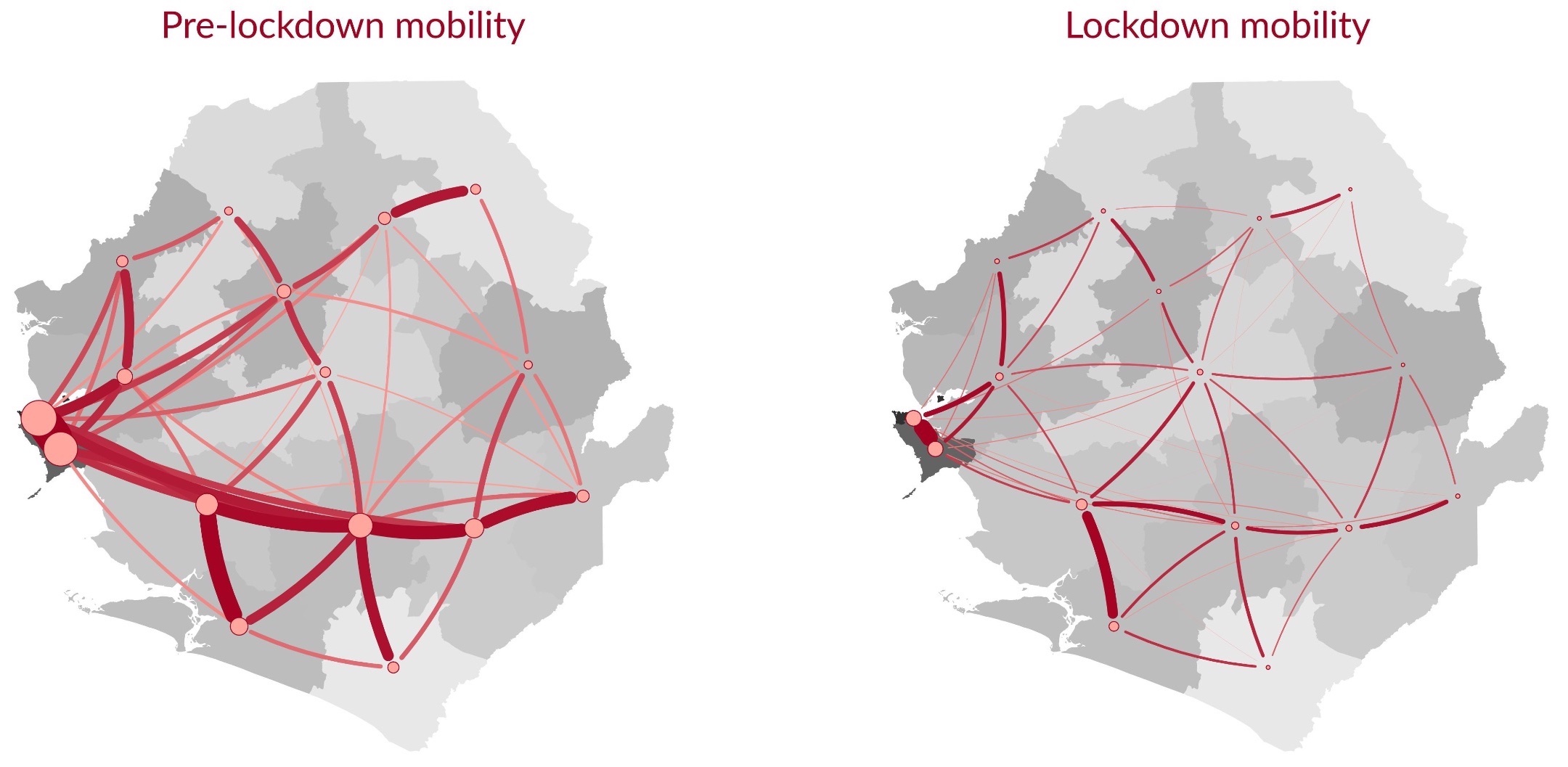
    We analyze mobile phone communication data to investigate the dynamics of network segregation patterns of the same set of people both in terms of mobility and of social communication during the initial wave of COVID-19 in Sierra Leone. Interestingly, we find opposite trends in the network segregation dynamics, characterized overall by simultaneous increase in mobility segregation and reduction in social network segregation. Our results underscore the significance of data-driven studies going beyond single-axis approaches to assess the impact of emergency policies.
  2. Drivers of social influence in the Twitter migration to Mastodon, by L. La Cava, L.M. Aiello, and A. Tagarelli , published in Scientific Reports

    We analyzed the social network and the public conversations of about 75,000 users who migrated from Twitter to Mastodon, as we NERDS did too a year ago, and observed that the temporal trace of their migrations is compatible with a phenomenon of social influence, as described by a compartmental epidemic model of information diffusion. Drawing from prior research on behavioral change, we delved into the factors that account for variations of the effectiveness of the influence process across different Twitter communities.
    Read more in our blog post:
    https://communities.springernature.com/posts/get-out-of-the-nest-drivers-of-social-influence-in-the-twitter-migration-to-mastodon
  3. Cracking Open the European Newsfeed, by L. Rossi, F. Giglioetto, and G. Marino, published in Journal of Quantitative Description: Digital Media
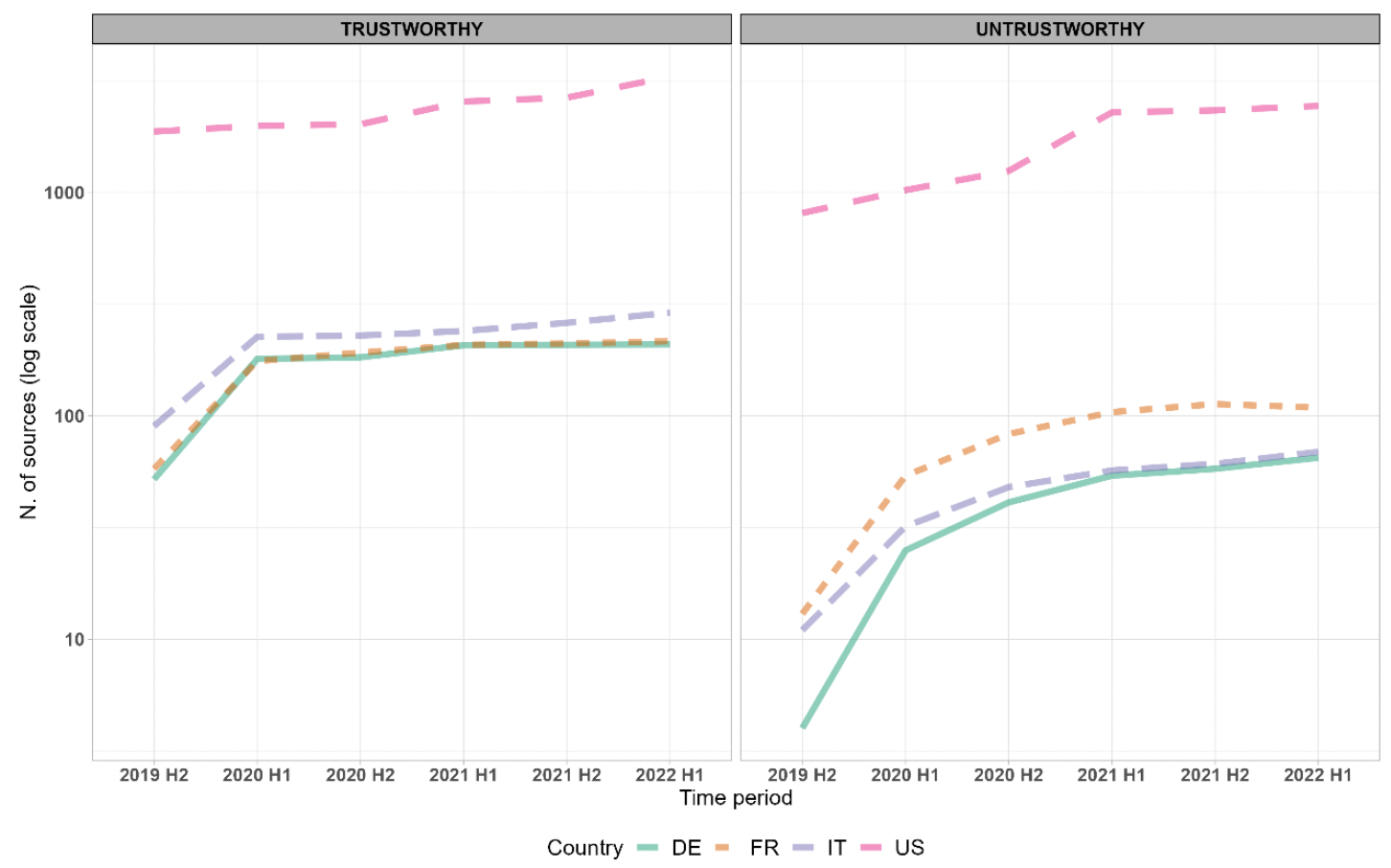
    This paper contributes to the ongoing effort to describe and quantify the quality of information that is shared on large social media platforms. We do this by complementing existing research that provided a first quantitative assessment of the quality of the information circulating on Facebook among US users. Leveraging an updated version of the same data source — Meta’s URL Shares Dataset — and replicating much of the methodology, we quantify the trustworthy and untrustworthy links to external websites that have been shared on Facebook in the period between 2019 and 2022 in three major European countries (Germany, France, and Italy). We observe a clear decline in the number of URLs present in the dataset and an increase in the URLs from untrustworthy domains as a percentage of the total URLs shared in a year. This increase seems to be higher in electoral years (in Germany and in Italy) but it does not translate into an increase of Views received from untrustworthy sources.

NERDS calls for papers: Social good, Sustainable mobility, Spatial data science

NERDS are currently involved in co-organizing special issues for societally relevant research.

Here our three open calls for papers:

  1. Complex Systems for Social Good
    Advances in Complex Systems, NERDS co-organizer: Vedran Sekara
    CFP, deadline Dec 15th: https://www.worldscientific.com/page/acs/callforpapers01
    Data, data science, machine learning, and AI tools and evidence are becoming increasingly important to tackle the complex challenges of climate change, social inequalities, geopolitical crises, migration, and public health emergencies. Complex Systems can provide a robust theoretical framework to address critical operational issues for vulnerable contexts such as replicability and transferability of results, explainability of models, and understanding of the challenges of algorithmic systems and possible biases. This topical issue has the goal of reviewing the potential contributions that Complex Systems can have on creating public value and producing public policy practices.
  2. Spatial Data Science for Planning
    GeoForum Perspektiv, NERDS co-organizer: Ane Rahbek Vierø
    CFP (expression of interest), deadline Jan 15th: https://journals.aau.dk/index.php/gfp/announcement/view/207
    We invite submissions that align with the themes of Spatial Data Science, encompassing for example Python, R, AI/ML, Business Intelligence, and their integration with geographic data. Authors are encouraged to explore both theoretical and practical aspects, sharing insights, case studies, methodologies, and real-world applications. Accepting both English and Danish contributions.
  3. Urban Mobility and Green Transportation in Sustainable Cities 
    Journal of Physics: Complexity, NERDS co-organizer: Michael Szell
    CFP, deadline May 31st: https://iopscience.iop.org/collections/jpcomplex-231012-387
    This Focus aims to explore the intersection of physics and complexity in the context of urban mobility and green transportation, shedding light on cutting-edge research that not only elucidates the fundamental principles governing these systems but also offers practical applications to create more sustainable and efficient cities. Regarding the green transportation, it can be any means of travel that does not negatively impact the environment, including (but are not limited to) bikes (dockless or docked sharing ones), ebikes (both private or sharing ones), electric vehicles. A better green transportation would involve both the infrastructure level and human behaviors level.

Please contact us for any questions regarding these calls. Happy writing/submitting!