Author Archives: jjuu

Carl Bergstrom visiting NERDS and SODAS

Carl Bergstrom in Copenhagen: two talks in August

We are delighted to host Carl Bergstrom, Professor of Biology at the University of Washington and member of the External Faculty at the Santa Fe Institute, in Copenhagen this August.

Bergstrom’s work spans evolutionary biology, epidemiology, network science, the science of science, and the spread of misinformation. During his visit he will give two talks: one on recent research into the incentives that discourage risky science, and one on a new bachelor-level course — and accompanying book — on learning and thinking in a world of large language models.

Both talks are open to all colleagues in the area. Join us!


Talk 1 — The impediments to high-risk, high-return research

Wednesday 19 August, 14:00
Auditorium, Statens Naturhistoriske Museum
Øster Voldgade 5, Copenhagen
(a reception with refreshments will follow the talk)

Scientific researchers may be driven by curiosity, but they are constrained by the realities of the scientific ecosystems in which they operate and motivated by the incentives with which they are confronted. We can use mathematical models of the research enterprise to understand how scientific norms and institutions shape the questions we ask, the efficiency with which we work, and the discoveries we make about the world around us.

In this talk I present a trio of mathematical models aimed at revealing why scientists are reluctant to propose and conduct high-risk research. In the first vignette, we look at how peer review filters — ex ante review, as for grant proposals, and ex post review, as for completed manuscripts — shape the types of questions that researchers pursue. In the second, we develop an economic “hidden action” model to explore how the unobservability of risk and effort discourages risky research. In the third, we look at how competition for high-profile publications, prizes, and jobs can induce risk-taking behavior.

Scientific norms and institutions are not god-given; we create and maintain them. If we can understand their consequences, we have the potential to nudge them in directions better tailored to our contemporary research questions and technologies.


Talk 2 — Modern day oracles or bullshit machines: how to thrive in a ChatGPT world

Friday 21 August, 11:00
Copenhagen Center for Social Data Science (SODAS), conference room CSS 1-1-12
Øster Farimagsgade 5, Copenhagen

Large language models (LLMs) have upended education. Students and faculty alike are struggling with the pace of change. We have developed a general education course, Modern Day Oracles or Bullshit Machines, for every college freshman and high school student wanting to reflect on what it means to be human in an LLM-infused world. The course takes a collaborative learning approach to a fundamental question grounded in the humanities: how can we learn and thrive with LLMs?

In this talk, I provide an overview of the course, discuss what we have learned about teaching undergraduates to think about what it means to be a learner, scholar, and human being in a ChatGPT world, and reflect on the challenges of teaching about this rapidly evolving technology.

Course website: thebullshitmachines.com


About Carl Bergstrom

Carl Bergstrom is a Professor of Biology at the University of Washington. Broadly, his research contributions are many, ranging from how evolution encodes information in genomes to how it moves, and distorts, across online networks. Bergstrom’s many research contributions include the Eigenfactor metrics for measuring the influence of scholarly journals, foundational work on the science of science and the incentives that shape research, and models of how misinformation spreads through social media and, more recently, through generative AI. He is the co-author of the book Calling Bullshit: The Art of Skepticism in a Data-Driven World. Bergstrom is an eager science communicator and many will recognize Bergstrom from his communication effort during the COVID-19 pandemic when he gained a wide following. Trained in evolutionary biology and mathematical population genetics, he earned his B.A. from Harvard and his Ph.D. from Stanford, and his work continues to cross the boundaries between the natural and social sciences.

Ariel Avanzi has joined NERDS

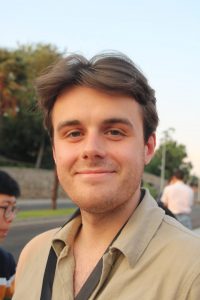
Ariel joins us as a new Research Assistant. With his background in the physics of complex systems, he will work with Jonas L. Juul on quantifying how networks change.

One important application of Ariel’s work could be in the shipping industry, and the project is funded by two maritime foundations: Orient’s Fund and the Danish Maritime Fund.

We are thrilled to have you on board, Ariel.
Ahoy!

Jonas Juul wins two grants for maritime-focused network science research

Orient’s Foundation and the Danish Maritime Foundation have decided to fund Jonas Juul’s research with a total amount of DKK 735.000 (€100,000.)

In the 18-month project, Jonas Juul will study the dynamics of growing and changing networks, developing new statistical tools to quantify how networks grow. The project will be conducted in coordination with the major Danish shipping company NORDEN.

We are excited that the maritime industry and maritime foundations have decided to board our network science journey.

Congratulations to you Jonas. We wish you fair winds and smooth sailing for the work ahead.

An AI-generated network of ships! (Created with Microsoft Copilot)

An AI-generated network of ships! (Created with Microsoft Copilot)

PhD and Postdoc call: Using data science to improve epidemic preparedness

We are looking for PhDs and Postdocs to join Jonas Juul improving inference, forecasting, and mitigation in future pandemics.

The project (funded by the Novo Nordisk Foundation) will improve epidemic preparedness in several ways, for example:

  • By improving the statistical foundation for the projection of epidemic case numbers.
  • By quantifying the effectiveness and efficiency of mitigation strategies analytically and numerically, we will get a better understanding of how mitigation strategies should adapt as an epidemic develops.
  • By studying plausible infection patterns in combination with Danish register data to understand how the COVID-19 epidemic propagated through Danish social networks.

The positions come with attractive opportunities for conference participation, travel, etc., and Copenhagen offers a world-class research community in network science, epidemiology, and data science.

Interested in large-scale data analysis, applied statistics, and/or analytical methods for studying epidemics in networks? Read more here:

and feel free to reach out to Jonas Juul (jjuu@itu.dk) if you have any questions.

Jacob Liam Curran-Sebastian has joined NERDS

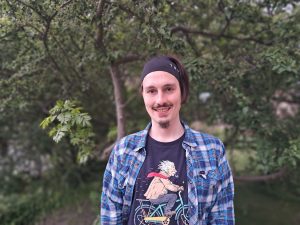
Picture of JacobJacob joins us as a new postdoc, bringing degrees in mathematics and extensive experience with data‑driven modeling of epidemics.
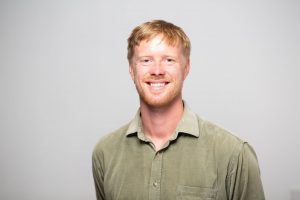
He will work with Jonas L. Juul and Morten Boilesen on the InForM project (funded by the Novo Nordisk Foundation), using data from Statistics Denmark and Statens Serum Institut to study how COVID‑19 spread in Denmark. Jacob already knows his way around the data and we are super excited to have him with us. Welcome, Jacob!

Morten Boilesen has joined NERDS

We welcome our latest NERDS member: Morten Boilesen.Headshot of Morten

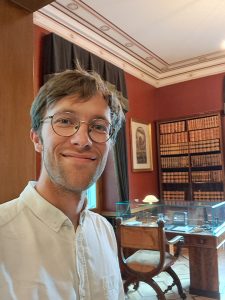
Morten joins as a new PhD student, coming with degrees in mathematics, musicology, and engineering, and experience as a start-up data scientist.

Morten will work with Jonas L Juul on the InForM project (funded by the Novo Nordisk Foundation), using Danish register data to study how COVID-19 spread in Denmark. 3 exciting years ahead! We are excited to have you with us, Morten. Welcome!

Jonas Juul wins the H.C. Ørsted Research Talent Prize

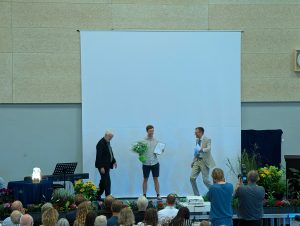
On August 14 2025, our Jonas Juul was awarded the 2025 H.C. Ørsted Research Talent Prize.

Every year, the H.C. Ørsted society celebrates Danish physicist and father of electromagnetism H.C. Ørsted’s birthday with a grand party in Rudkøbing Langeland. At the party, the society hands out two prizes to talented researchers. This year, Jonas received one of these prizes in recognition of his outstanding research, its societal impact, and its potential for addressing security threats such as misinformation and epidemics.

At the party, Jonas was celebrated along with Nobel Prize winner Professor Morten Meldal (University of Copenhagen), who was awarded the main H.C. Ørsted Research Prize, Associate Professor Luisa Sinischalchi (Technical University of Denmark), who won the other H.C. Ørsted Research Talent prize, and several university students and school pupils who won monetary awards in recognition of excellence.

Congratulations, Jonas!

ITU also wrote about Jonas’ award here: https://en.itu.dk/About-ITU/Press/News-from-ITU/2025/Jonas-Juul-receives-the-HC-Orsted-Research-Talent-Award-2025

Jonas receiving the prize

Photo credit: Vedran Sekara

Jonas Juul is a new member of the Danish Young Academy

The Danish Young Academy is a scientific academy for talented young researchers in Denmark under the Royal Danish Academy of Science and Letters. This year, 9 new members – one of them our Jonas – join the Young Academy the purpose of which is to strengthen Danish basic research and interdisciplinarity. According to the Young Academy, all members are “prominent profiles with strong international experiences and interesting views on research and society.”

Jonas provides more of his thoughts here: https://en.itu.dk/About-ITU/Press/News-from-ITU/2025/Jonas-Juul-has-been-accepted-into-the-Young-Academy

Jonas at the Young Academy’s Summer Party. The party took place at the Carlsberg Academy and was the first official event with the new Young Academy cohort participating.

Call for PhD and Postdocs: Using data science to improve epidemic preparedness

We are looking for PhDs and Postdocs to join Jonas Juul improving inference, forecasting, and mitigation in future pandemics. The application deadline is May 1st and you can apply here.

The project (funded by the Novo Nordisk Foundation) will improve epidemic preparedness in several ways, for example:

  • By studying a unique data set of hundreds of thousands of COVID-19 genomes. Studying these nation-scale data in combination with the Danish collection of registers, we hope to understand the details of COVID-19 propagation and mitigation impact in Denmark.
  • By quantifying the effectiveness and efficiency of mitigation strategies analytically and numerically, we will get a better understanding of how mitigation strategies should adapt as an epidemic unfolds,
  • By improving the statistical foundation for the projection of epidemic case numbers we hope to save lives and money when the next pandemic hits.

The positions come with attractive opportunities for conference participation, travel, etc., and Copenhagen offers a world-class research community in network science, epidemiology, and data science.

Interested in large-scale data analysis, applied statistics, and/or analytical methods for studying epidemics in networks? Read more and apply here: https://candidate.hr-manager.net/ApplicationInit.aspx?cid=119&ProjectId=181783&DepartmentId=3439&MediaId=1282  and feel free to reach out to Jonas Juul if you have any questions (deadline May 1st 2025)

The NERDS group is a down-to-earth and fun place to be. Copenhagen is often named as the best city in the world to live in, and for good reasons. It’s world-renowned for food, beer, art, music, architecture, the Scandinavian “hygge”, and much more. In Denmark, parental leave is generous, and child-care is excellent and cheap.