With NERDS winning grants and growing, we have added a Positions page at https://nerds.itu.dk/positions/, currently featuring 2 open calls at ITU that are directly relevant to us as they can lead to NERDS positions. If your research overlaps with ours and you are interested get in touch!
1) PhD Open Call 2021
The ITU-wide PhD Open Call 2021, deadline March 10th, features 2 potential PhD projects by NERDS members:
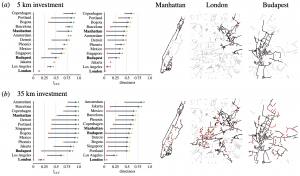
1) Michael: Network analysis of urban transport networks for a green transition from car- centricity to cycling
2) Michele+Luca: Modelling Complex Social Systems to Handle Disinformation
2) Asst./Assoc. Professor in data science and machine learning
This computer science department wide call, deadline March 29th, is looking for applicants in any of these areas, including NERDS topics:
- Data mining, large-scale data analysis, data visualization
- Machine learning
- Natural language processing
- Network science, analysis of large (social and other) networks
- Bioinformatics
- Computer vision, signal analysis
- Computational social science
- Fairness and accountability in data science and machine learning
- Statistics, computational statistics, probabilistic modelling
Watch this space and stay tuned for more. 🤓
 Luca joins us as Associate Professor, coming from industry. He conducts interdisciplinary research at the intersection of computational social science, digital health, network science, and urban informatics, using large-scale digital data to quantify people’s well-being and build systems that can improve it. Currently, he is focusing on Natural Language Processing to quantify social and psychological experiences from text.