Michael, Anastassia and Manuel win Innoexplorer Grant!

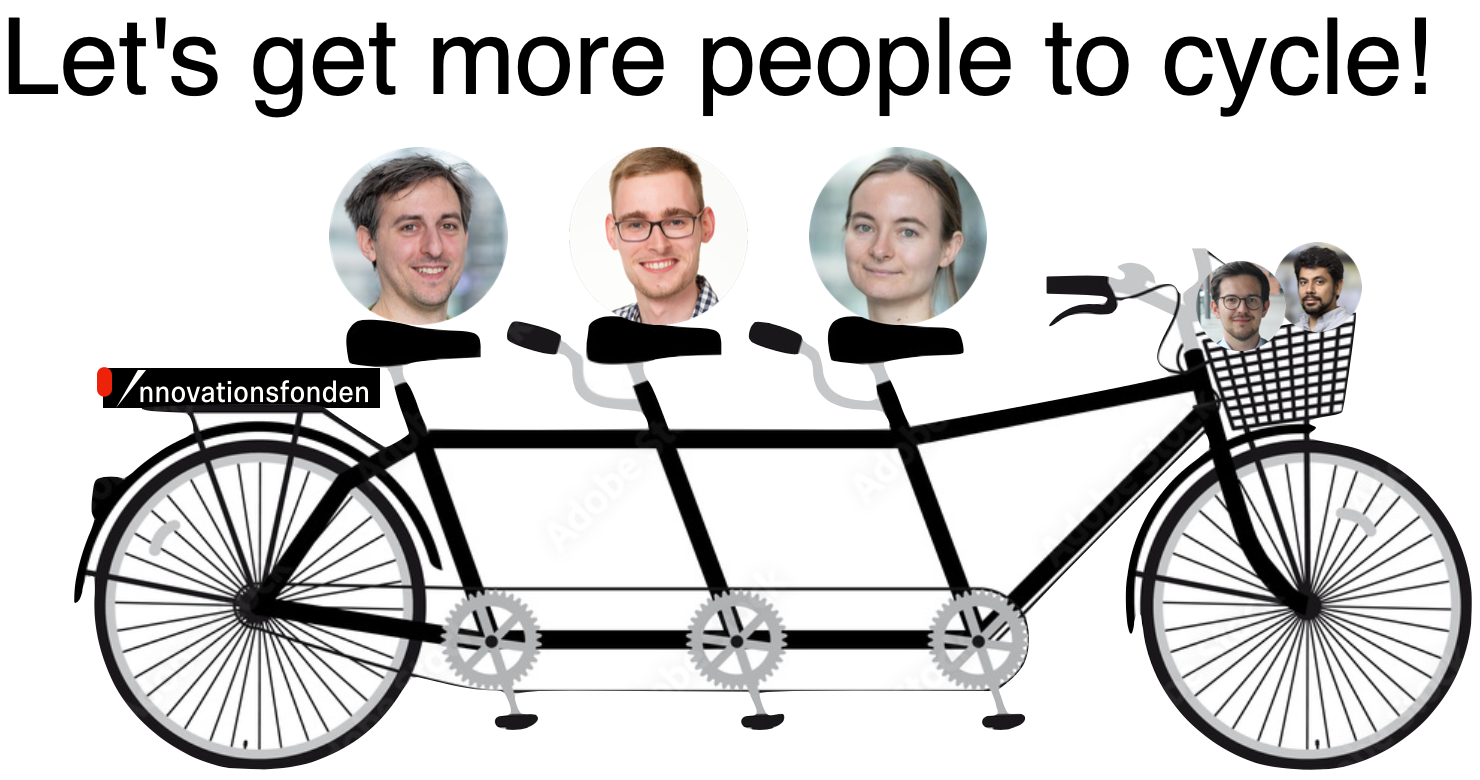
Michael Szell, Anastassia Vybornova, and Manuel Knepper have won a 1-year “Innoexplorer” grant by the Innovation Fund Denmark, of DKK 1.4 million (~EUR 188,000), for a project to turn raw bicycle network algorithms into polished software. Congratulations to the team of Michael, Manuel and Anastassia! 🥳
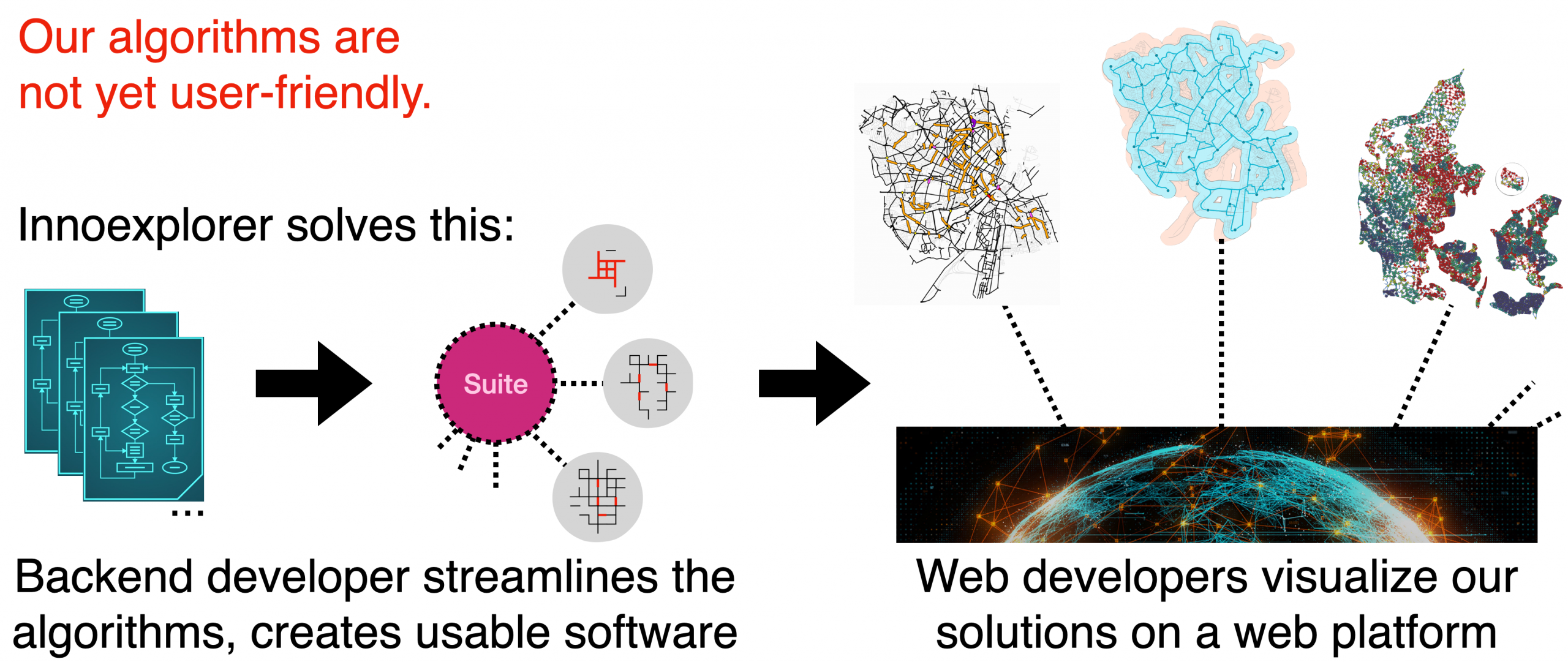
The project Bicycle network planning for a greener future made in Denmark: From network growth algorithms to user-friendly planning software has two goals: 1) take existing algorithms from our bicycle network research that we developed in the past years, and turn them into software that is usable by urban planners, 2) visualize the solutions on a web platform to guide urban planners on their usage. Innoexplorer in general aims to close the gap between research and policy with targeted short-term funding, to arrive at commercially viability. This easy applicability is also exactly what our bicycle network research was lacking so far.

The project will hire 2 people for one year: A research software engineer, and a web developer. We are already in the process of hiring our existing visitor Manuel Knepper for the first position, to start from January 2026. The web developer is planned to start from March 2026. Further, the project will be supported by Anastassia Vybornova, who has herself developed several of the algorithms, and by two external urbanism / visualization experts. We hope that the Innovation Fund’s support will ultimately enable more people to enjoy the benefits of cycling!
Vedran wins Independent Research Fund Denmark Grant!

As reported on ITU’s frontpage, Vedran Sekara has just won an Independent Research Fund Denmark grant (a “DFF 1”) of DKK 3.1 million (~EUR 415,000) for a project to understand how climate change affects our collective behaviour – especially our movement patterns. Congratulations Vedran for this “big catch”! 🥳

The project ClimateAdapt will work with large volumes of anonymised GPS data from countries like the US and countries in Europe. These datasets reveal how millions of people move through their daily lives – working, shopping, doing social activities. By matching these movement patterns with local climate events such as heatwaves, cloudbursts, and changing humidity levels, Vedran and his team aim to map out how behaviour changes. Read more in the ITU news.

Vedran’s ClimateAdapt project will soon open calls for PhDs/Postdocs.. stay tuned!

Two new NERDS papers: Algorithmic bias, street network simplification

We have two new publications out!

  1. Detecting bias in algorithms used to disseminate information in social networks and mitigating it using multiobjective optimization, by Vedran Sekara, Ivan Dotu, Manuel Cebrian, Esteban Moro, Manuel Garcia−Herranz published in PNAS Nexus

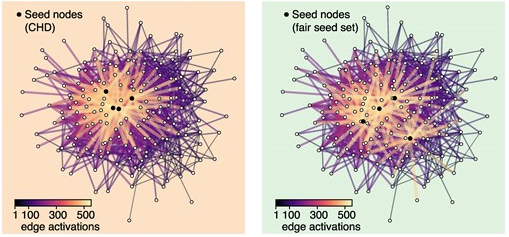
    Based on extensive computer simulations on synthetic and 10 diverse real-world social networks we show that seeding information in social networks using state-of-the-art influence maximization methods creates information gaps. Our results show that these algorithms select influencers who do not disseminate information equitably, threatening to create an increasingly unequal society. To overcome this issue, we devise a multiobjective algorithm which both maximizes influence and information equity. Our results demonstrate it is possible to reduce vulnerability at a relatively low trade-off with respect to spread. This highlights that in our search for maximizing the spread of information we do not need to compromise on information equality.
  2. Adaptive continuity-preserving simplification of street networks, by Martin Fleischmann, Anastassia Vybornova, James D. Gaboardi, Anna Brázdová, Daniela Dančejová, published in Computers, Environment and Urban Systems

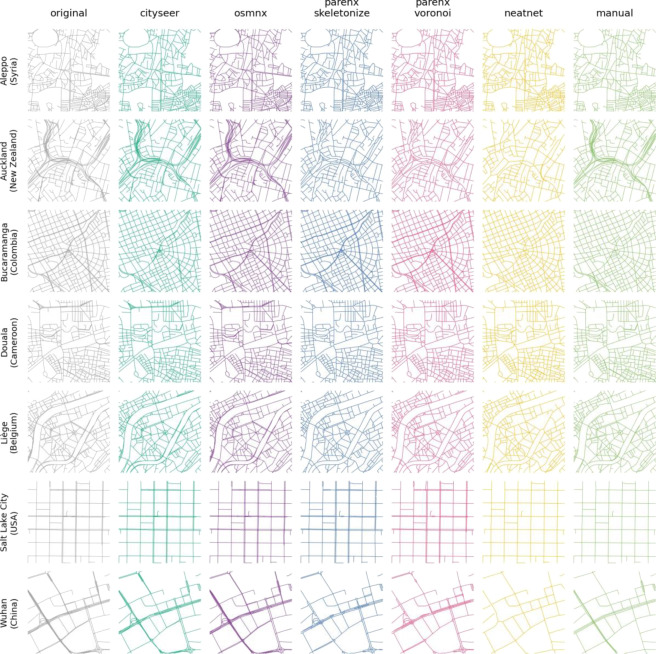
    Street network data is widely used to study human-based activities and urban structure. Often, these data are geared towards transportation applications, which require highly granular, directed graphs that capture the complex relationships of potential traffic patterns. While this level of network detail is critical for certain fine-grained mobility models, it represents a hindrance for studies concerned with the morphology of the street network. For the latter case, street network simplification — the process of converting a highly granular input network into its most simple morphological form — is a necessary, but highly tedious preprocessing step, especially when conducted manually. In this manuscript, we develop and present a novel adaptive algorithm for simplifying street networks that is both fully automated and able to mimic results obtained through a manual simplification routine. The algorithm — available in the neatnet Python package — outperforms current state-of-the-art procedures when comparing those methods to manually, human-simplified data, while preserving network continuity.
    See also the neatnet package: https://github.com/uscuni/neatnet

Ditte Bjerregaard has joined NERDS

We welcome our latest NERDS member: Ditte Bjerregaard.

Ditte joins as a new PhD student, coming with a background in anthropology, and as the founder and director of the Center for Violence Prevention (Center for Voldsforebyggelse, https://centerforvoldsforebyggelse.com/).

Ditte will work with Michele Coscia, using data from police reports and court cases involving femicide, to understand the determinants and, hopefully, create early warning systems. We are excited to have you with us, Ditte. Welcome!

Three new NERDS publications: Polarization, image-to-text-mapping, and candidate recommendation

We have three new publications out, as always on a variety of topics!

  1. Estimating affective polarization on a social network, by Marilena Hohmann and Michele Coscia, published in PLOS ONE.

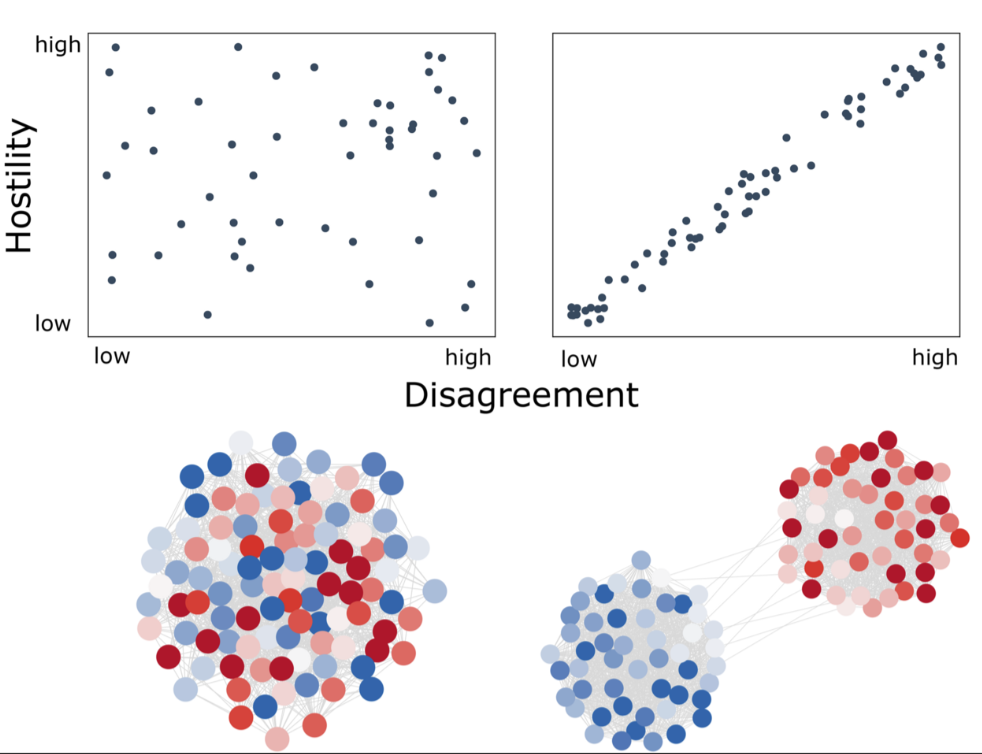
    Concerns about polarization and hate speech on social media are widespread. Affective polarization, i.e., hostility among partisans, is crucial in this regard as it links political disagreements to hostile language online. However, only a few methods are available to measure how affectively polarized an online debate is, and the existing approaches do not investigate jointly two defining features of affective polarization: hostility and social distance. To address this methodological gap, we propose a network-based measure of affective polarization that combines both aspects – which allows them to be studied independently. We show that our measure accurately captures the relation between the level of disagreement and the hostility expressed towards others (affective component) and whom individuals choose to interact with or avoid (social distance component). Applying our measure to a large-scale Twitter data set on COVID-19, we find that affective polarization was low in February 2020 and increased to high levels as more users joined the Twitter discussion in the following months.
    See also Michele’s blog post: https://www.michelecoscia.com/?p=2466
  2. Leveraging VLLMs for Visual Clustering: Image-to-Text Mapping Shows Increased Semantic Capabilities and Interpretability, by Luigi Arminio, Matteo Magnani, Matías Piqueras, Luca Rossi, and Alexandra Segerberg published in Social Science Computer Review.

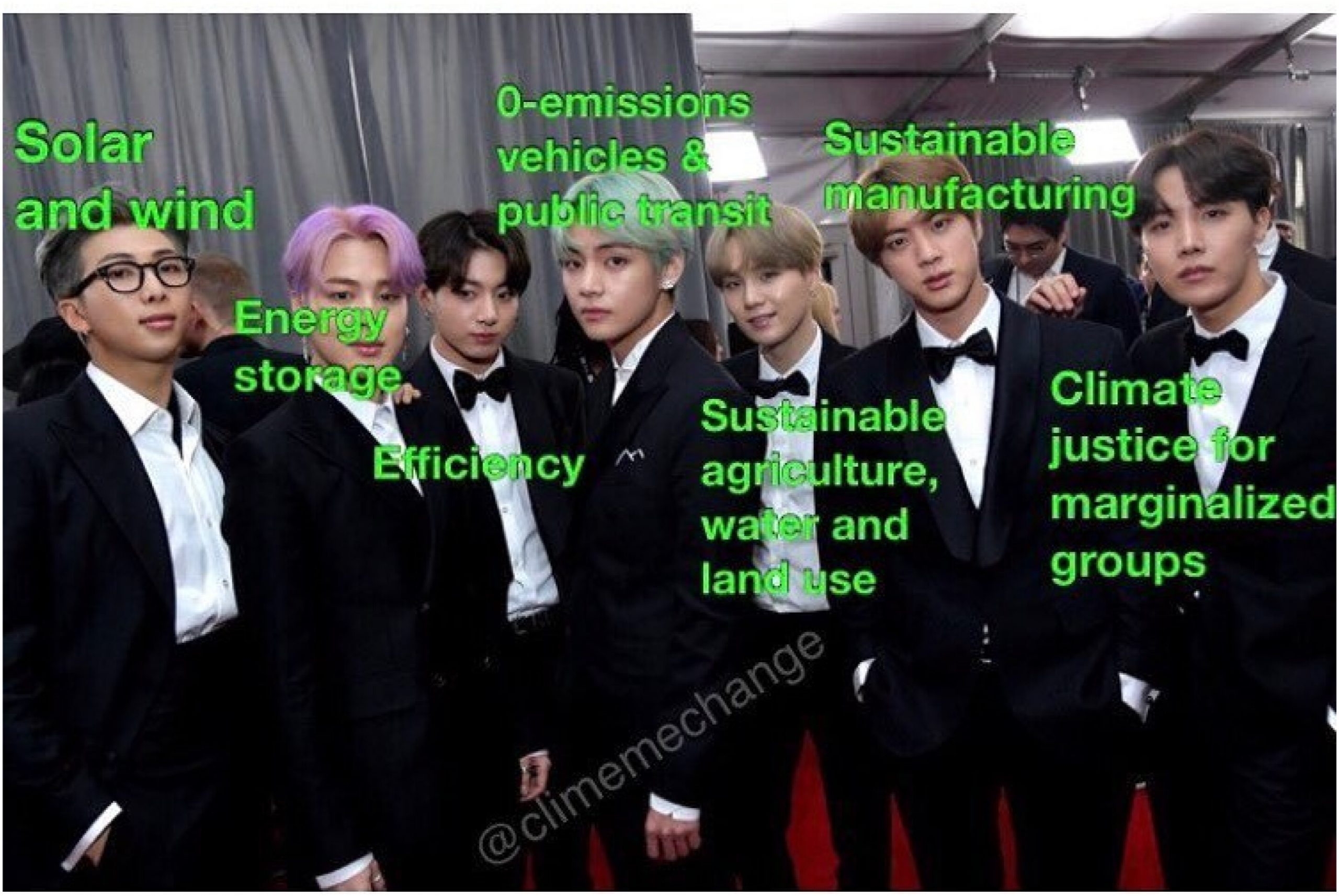
    We test an approach that leverages the ability of Vision-and-Large-Language-Models (VLLMs) to generate image descriptions that incorporate connotative interpretations of the input images. In particular, we use a VLLM to generate connotative textual descriptions of a set of images related to climate debate, and cluster the images based on these textual descriptions. In parallel, we cluster the same images using a more traditional approach based on CNNs. In doing so, we compare the connotative semantic validity of clusters generated using VLLMs with those produced using CNNs, and assess their interpretability. The results show that the approach based on VLLMs greatly improves the quality score for connotative clustering. Moreover, VLLM-based approaches, leveraging textual information as a step towards clustering, offer a high level of interpretability of the results.
  3. Mapping Stakeholder Needs to Multi-Sided Fairness in Candidate Recommendation for Algorithmic Hiring, by Mesut Kaya and Toine Bogers, published in RecSys ’25: Proceedings of the Nineteenth ACM Conference on Recommender Systems

    Past analyses of fairness in algorithmic hiring have been restricted to single-side fairness, ignoring the perspectives of the other stakeholders. In this paper, we address this gap and present a multi-stakeholder approach to fairness in a candidate recommender system that recommends relevant candidate CVs to human recruiters in a human-in-the-loop algorithmic hiring scenario. We conducted semi-structured interviews with 40 different stakeholders (job seekers, companies, recruiters, and other job portal employees). We used these interviews to explore their lived experiences of unfairness in hiring, co-design definitions of fairness as well as metrics that might capture these experiences. Finally, we attempt to reconcile and map these different (and sometimes conflicting) perspectives and definitions to existing (categories of) fairness metrics that are relevant for our candidate recommendation scenario.

Roberta Sinatra and Vedran Sekara talk at Rigsrevisionen

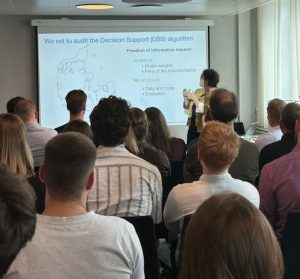
In August, NERDS faculty Roberta Sinatra and Vedran Sekara were invited to Rigsrevisionen, the Danish Audit national agency, to give a talk on bias in algorithms.

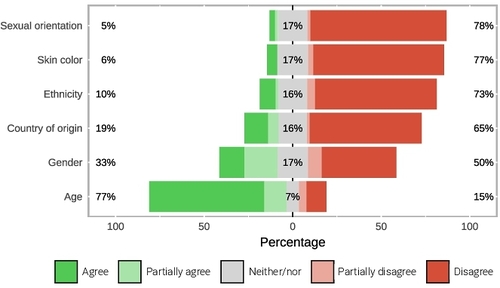
TheRoberta Sinatra giving a talk at Rigsrevisioneny presented their latest research project, focusing on how algorithmic bias can affect decisions in sensitive areas of public policy. In particular, they focused on their FAccT paper about a Decision Support System used by the Danish social sector, where algorithms have been tested to assess the risk of maltreatment for children. Their work showed that the algorithm was biased with respect to age: for instance, a 16-year-old shoplifter was rated at higher risk than a 2-month-old baby living with two parents struggling with substance abuse. This illustrates how algorithmic outputs can amplify bias if not critically examined, and why human oversight remains crucial.

The talk at Rigsrevisionen also raised the broader question of whether algorithms can be used responsibly for risk assessments in complex social contexts, and emphasized the need for careful scrutiny when deploying algorithmic solutions, especially AI-driven, in the public sector.

The event was organized by Rigsrevisionen’s internal data analytics network and drew a large audience, underscoring the relevance of these issues for public accountability and governance.

Read Rigsrevisionen’s post about the talk on LinkedIn →

Read the paper: “Failing Our Youngest: On the Biases, Pitfalls, and Risks in a Decision Support Algorithm Used for Child Protection” →

Read the Danish news piece “Kan algoritmer se ind i et barns fremtid?” →

Morten Boilesen has joined NERDS

We welcome our latest NERDS member: Morten Boilesen.Headshot of Morten

Morten joins as a new PhD student, coming with degrees in mathematics, musicology, and engineering, and experience as a start-up data scientist.

Morten will work with Jonas L Juul on the InForM project (funded by the Novo Nordisk Foundation), using Danish register data to study how COVID-19 spread in Denmark. 3 exciting years ahead! We are excited to have you with us, Morten. Welcome!

New NERDS publication on hitting the music charts

We have a new exciting publication out! 🎸

Is it getting harder to make a hit? Evidence from 65 years of US music chart history, by Marta Ewa Lech, Sune Lehmann & Jonas L. Juul, published in EPJ Data Science

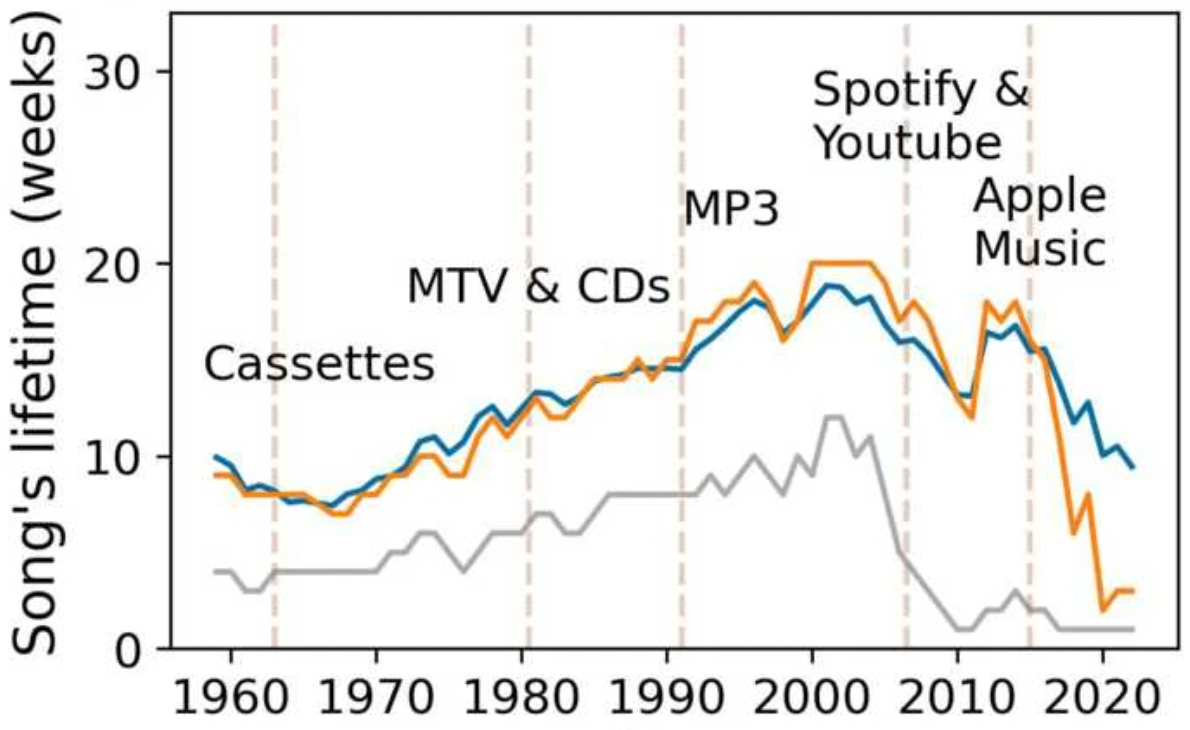
We show that the dynamics of the Billboard Hot 100 chart have changed significantly since the chart’s founding in 1958, and, in particular, in the past 15 years. Whereas most songs spend less time on the chart now than songs did in the past, we show that top-1 songs have tripled their chart lifetime since the 1960s, and the highest-ranked songs maintain their positions for far longer than previously. At the same time, churn has increased drastically, and the lowest-ranked songs are replaced more frequently than ever. Together, these observations support two competing and seemingly contradictory theories of digital markets: The Winner-takes-all theory and the Long Tail theory. Who occupies the chart has also changed over the years: In recent years, fewer new artists make it into the chart and more positions are occupied by established hit makers. Finally, investigating how song chart trajectories have changed over time, we show that historical song trajectories cluster into clear trajectory archetypes characteristic of the time period they were part of. Our results are interesting in the context of collective attention: Whereas recent studies have documented that other cultural products such as books, news, and movies fade in popularity quicker in recent years, music hits seem to last longer now that in the past.

Two new NERDS papers: NFT markets, settlement data

We have two new publications out!

  1. Characterizing NFT Markets through a Multilayer Network Approach, by Alessia Galdeman, Lucio La Cava, Matteo Zignani, Andrea Tagarelli, Sabrina Gaito published in Blockchain: Research and Applications

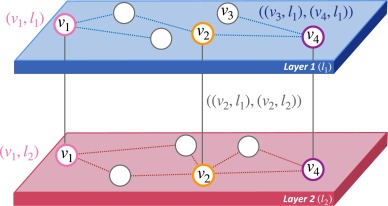
    In this study, we explore a multilayer network modeling approach to analyze transactions in multiple NFT markets. We reveal previously unnoticed macroscopic and mesoscopic traits by investigating indicators that discern whether markets are independent or linked: users trading NFTs are organized in cross-market communities where multi-market users act as bridges across marketplaces, adapting to the diverse nature of the markets they operate in. We also conduct an in-depth examination of such multi-market users, studying their specific activity patterns that leave a distinctive mark on the system: the majority of multi-market users well differentiate their earnings and expenses among the markets, while a fraction of them is directed toward a more polarized money allocation based on the typology of the markets.
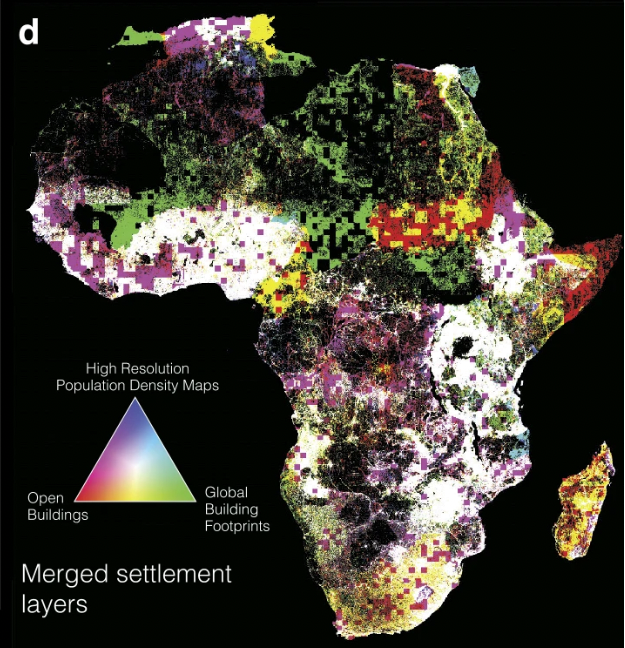
  2. Uncovering large inconsistencies between machine learning derived gridded settlement datasets, by Vedran Sekara, Andrea Martini, Manuel Garcia-Herranz & Do-Hyung Kim, published in EPJ Data Science

    We compare three settlement maps developed by Google (Open Buildings), Meta (High Resolution Population Density Maps) and Microsoft (Global Building Footprints), and uncover which factors drive mismatch. Our study focuses on 44 African countries. We build a global machine learning model to predict where datasets agree, and find that geographic and socio-economic factors considerably impact overlap. However, we also find there is great variability across countries, suggesting complex interactions between country morphology and dataset overlap. It is vital to understand the shortcomings of AI-derived settlement layers as international organizations, governments, and NGOs are already experimenting with incorporating these into programmatic work. We anticipate our work to be a starting point for more critical and detailed analyses of AI derived datasets for humanitarian, policy, and scientific purposes.

Jonas Juul wins the H.C. Ørsted Research Talent Prize

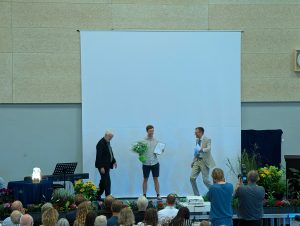
On August 14 2025, our Jonas Juul was awarded the 2025 H.C. Ørsted Research Talent Prize.

Every year, the H.C. Ørsted society celebrates Danish physicist and father of electromagnetism H.C. Ørsted’s birthday with a grand party in Rudkøbing Langeland. At the party, the society hands out two prizes to talented researchers. This year, Jonas received one of these prizes in recognition of his outstanding research, its societal impact, and its potential for addressing security threats such as misinformation and epidemics.

At the party, Jonas was celebrated along with Nobel Prize winner Professor Morten Meldal (University of Copenhagen), who was awarded the main H.C. Ørsted Research Prize, Associate Professor Luisa Sinischalchi (Technical University of Denmark), who won the other H.C. Ørsted Research Talent prize, and several university students and school pupils who won monetary awards in recognition of excellence.

Congratulations, Jonas!

ITU also wrote about Jonas’ award here: https://en.itu.dk/About-ITU/Press/News-from-ITU/2025/Jonas-Juul-receives-the-HC-Orsted-Research-Talent-Award-2025

Jonas receiving the prize

Photo credit: Vedran Sekara