NERDS are currently active at this year’s International AAAI Conference on Web and Social Media (ICWSM): https://www.icwsm.org/2021/index.html The International AAAI Conference on Web and Social Media (ICWSM) is a forum for researchers from multiple disciplines to come together to share knowledge, discuss ideas, exchange information, and learn about cutting-edge research in diverse fields with the common theme of online social media. This overall theme includes research in new perspectives in social theories, as well as computational algorithms for analyzing social media. ICWSM is a singularly fitting venue for research that blends social science and computational approaches to answer important and challenging questions about human social behavior through social media while advancing computational tools for vast and unstructured data.
As usual, Luca Maria Aiello fulfils his role as Senior PC member at ICWSM. Further, we published two new papers at the event:
- The Healthy States of America: Creating a Health Taxonomy with Social Media, by S. Šćepanović, L.M. Aiello, K. Zhou, S. Joglekar, and D. Quercia
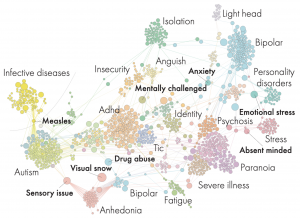
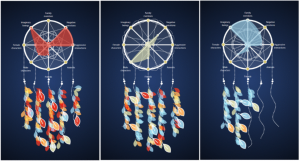
Since the uptake of social media, researchers have mined online discussions to track the outbreak and evolution of specific diseases or chronic conditions such as influenza or depression. Here we developed a Deep Learning tool for Natural Language Processing that extracts mentions of virtually any medical condition or disease from unstructured social media text. We applied it to Reddit and Twitter posts, analyzed the clusters of the two resulting co-occurrence networks of conditions, and discovered that they correspond to well-defined categories of medical conditions. This resulted in the creation of the first comprehensive taxonomy of medical conditions automatically derived from online discussions, which strikingly resembles the official International Statistical Classification of Diseases and Related Health Problems (ICD-11). - Multilayer Graph Association Rules for Link Prediction, by M. Coscia and M. Szell
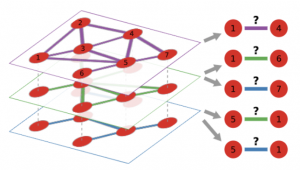
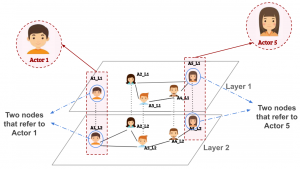
Here we investigate the multilayer link prediction problem with graph association rules: Will two nodes connect, and of which type?
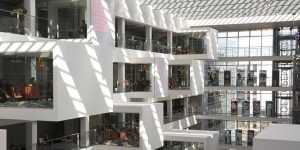
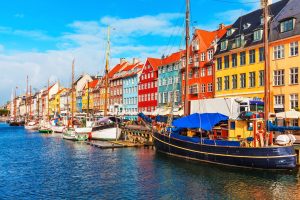 The position is in the NERDS group in the Computer Science Department. Both salary and working conditions are excellent. The group is a down-to-earth and fun place to be. Copenhagen is often named as the best city in the world to live in, and for good reasons. It’s world-renowned for food, beer, art, music, architecture, the Scandinavian “hygge”, and much more. In Denmark, parental leave is generous, and child-care is excellent and cheap.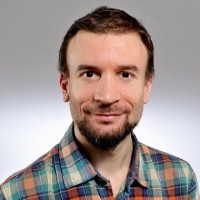
 Luca joins us as Associate Professor, coming from industry. He conducts interdisciplinary research at the intersection of computational social science, digital health, network science, and urban informatics, using large-scale digital data to quantify people’s well-being and build systems that can improve it. Currently, he is focusing on Natural Language Processing to quantify social and psychological experiences from text.